
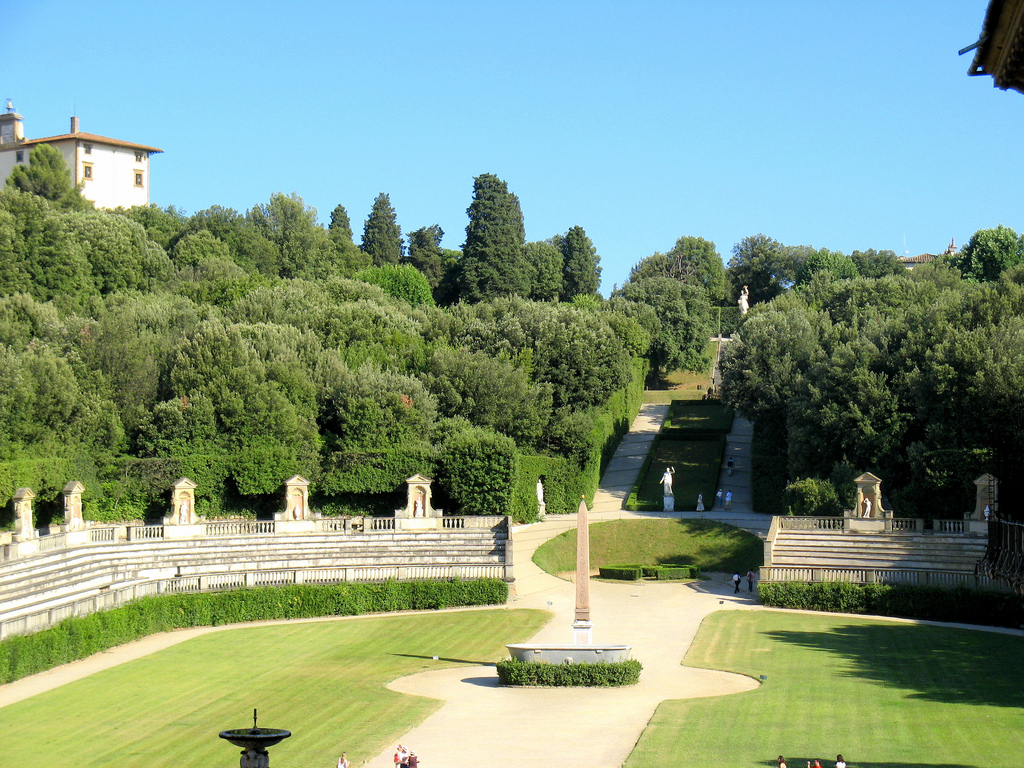
The Boboli Gardens, which extend over 45 hectares behind Palazzo Pitti, hide a fascinating history of power, art, and science. Initially created for Eleonora of Toledo, wife of Cosimo I de' Medici, in the 16th century, these gardens were not only a recreational place for the Medici court but also a true outdoor scientific laboratory.
Here, new cultivation techniques were experimented with and exotic plants from all over the known world were acclimatized. The Medici maintained a network of agents worldwide who sent rare seeds and plants to Florence. The garden thus became a center for botanical study, where species such as the sunflower and potato were cultivated for the first time in Europe.
The hydraulic system that feeds the numerous fountains and artificial grottos was cutting-edge for its time and influenced the design of many European royal gardens, including Versailles. The Medici aqueduct, built specifically for the gardens, was a masterpiece of hydraulic engineering that used gravity to create spectacular water features.
The Buontalenti Grotto represents the culmination of this fusion between art and technology: inside, a complex system of hydraulic automatons had been installed which, activated by water pressure, created special effects such as bird songs and artificial rain, amazing the court guests. The grotto also concealed a sophisticated misting system that created surprising atmospheric effects.
During World War II, the underground tunnels of the gardens were used as air raid shelters, while many statues were buried to protect them from bombing. Some of these works of art remained buried for years, and when they were recovered, it was discovered that the soil had preserved them perfectly.
